
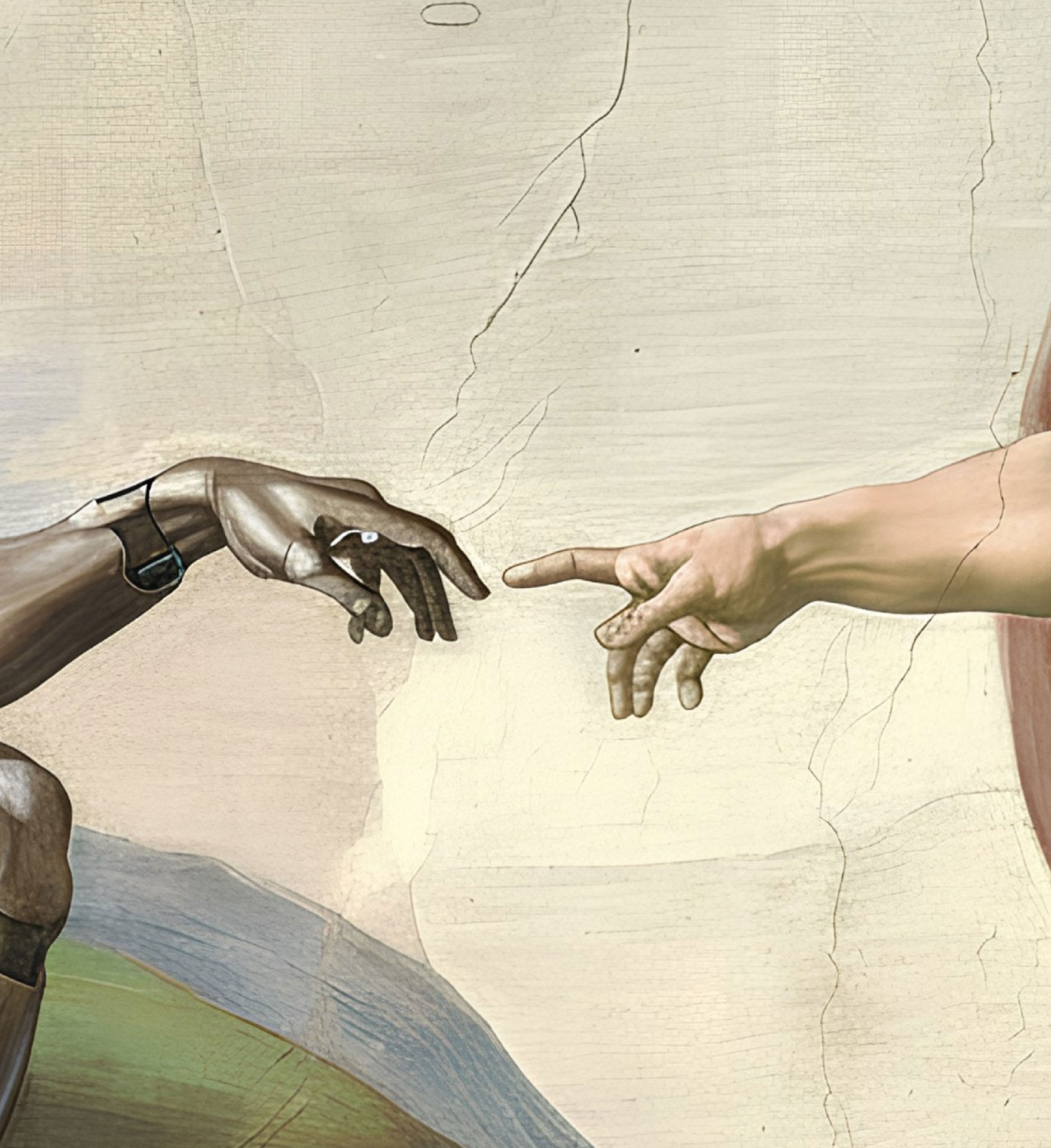
Quick Answer: AI speeds up creation and introduces unexpected ideas, shifting designers toward curation, judgment and strategic thinking. Authorship stays human, because the value now lies in guiding the vision, shaping the narrative and making the choices that give the work meaning.
How AI is Redefining Creative Authorship
Creative work has always followed a familiar storyline. We combine insight, taste, discipline and a spark of intuition to produce something fresh. Over time, the tools evolved, but the authorship remained clear. A person did the thinking, shaped the story and was responsible for the result. Today, AI has unsettled parts of that picture. At times it feels sharp and useful. At others it raises doubts. And sometimes it misses the mark entirely. What is certain is that the landscape is changing, and creatives are now exploring how to redefine authorship.
This shift is not about replacing creativity. It is about reshaping where it sits, how it flows and who takes credit for what. The question is no longer whether designers should use AI. The question is how to use it and stay in control of the work.
Link Between Human and Machine
What used to be a long path from idea to prototype is now a very short walk, as AI is (so far) capable of producing dozens of visual variations, directions or copy drafts in seconds. This is both incredible and slightly disorienting.
Instead of starting from a blank page, the designer now reviews a stack of possibilities. The focus moves from creation to curation and refinement. It demands stronger taste, not less. It forces sharper decision making and makes the quality of judgment more visible than ever.
Ironically, this makes authorship more important. Anyone can generate an image with a prompt. Very few can recognise the version that actually works. Even fewer can turn an AI suggestion into a finished piece that connects people in a commercially-viable and meaningful way.
The Ethics of Attribution
The more AI contributes to the process, the more we face a basic but important question. Who authored the work? This question is showing up everywhere in the industry. Does it even matter? Well yes, it matters because authorship is tied to ownership, credibility and professional identity.
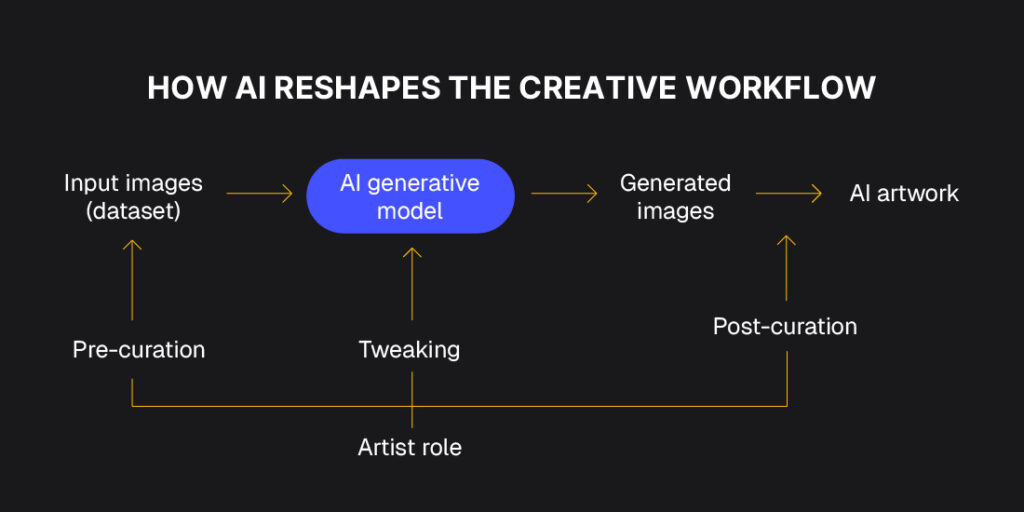
AI models draw inspiration from vast pools of existing work. Designers guide those models with context and nuance. The final output is a blend of both. If an idea exists because you defined the strategy, added your perspective and curated the final direction, then that same idea is yours. AI provided assistance, not authorship. The same way a camera does not make someone a photographer. The craft still sits with the person behind the lens.
With this said, what happens when a designer gives a model a short but meaningful prompt, gets a surprisingly strong output, and then only adjusts it lightly? In cases like this, the line between assistance and authorship starts to wobble. If AI contributes something unexpected that shapes the final direction in a way the designer did not fully foresee, can we still claim the idea originated with the human alone?
Unlike a camera, AI is not a passive tool. It interprets, creates and fills in creative gaps based on patterns learned from millions of examples. If the model introduces a concept the designer ends up using, some might argue that the machine shared the creative lift. Even if the designer guided the intent, AI influenced the outcome in a way that goes beyond execution. Let’s say the human sets the purpose and provides the taste. Then, AI adds a degree of surprise that can alter the path. In this case, it would be fair to say that the work is co-authored.
From Production to Problem Solving
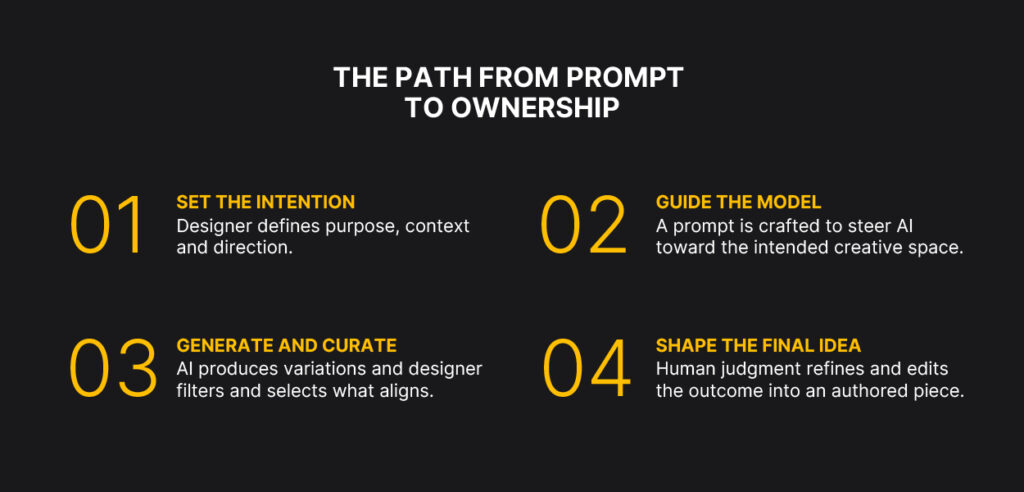
Another important shift is that design work is becoming less about execution and more about thinking. AI can automate repetitive tasks at speeds that would normally take hours. But taking advantage of this does not make the designer any less, in fact, it increases their value. With production handled more quickly, the designer has more space for strategy, more time to evaluate whether a direction aligns with the brand narrative, and gets to focus further on storytelling and the user experience of a project.
In other words, AI changes the distribution of effort. The machine helps with the fast steps. The human focuses on the meaningful ones. With this, designers have the ability to stand out even more. When AI can generate almost anything, the value shifts to the ability to choose, refine and define. Taste becomes a competitive advantage. Vision becomes the differentiator.eater rankings. Manipulation can be penalized by Google, so always concentrate on organic link building.
Partnership, Not Replacement
AI will continue to evolve at a fast pace. It will keep surprising designers and, occasionally, challenging them. But the core of creative authorship remains human. The role of the designer is not to compete with the technology but to lead it.
This new era rewards designers who stay flexible, curious and confident. Those who embrace experimentation without losing their voice. Those who understand that authorship comes from direction, not from pushing the buttons.
AI is rewriting the rules of creative authorship, but it is not replacing the author. It is changing how ideas form, how choices are made and how fast we can bring concepts to life. What once felt like a solo act is becoming a shared process where humans guide the vision and AI expands upon that.
The real shift is not about losing control. It is about redefining what it means to lead a creative idea from start to finish. The people who stay curious, use the tools and keep their own point of view at the centre will shape what authorship looks like in this new era. In the end, creativity evolves, but the author still matters. The rules may be rewritten, but the voice behind them is still ours.